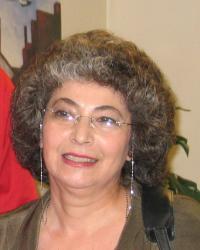
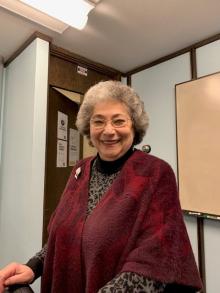
After more than five decades of teaching and service at the University of Washington, Associate Teaching Professor Zoya Mihailovna Polack is retiring from the Department of Slavic Languages and Literatures. Since joining UW in 1973, Professor Polack has taught generations of students, sharing her passion for Russian and Ukrainian language, literature, and culture. In doing so, she has left a lasting impression on countless students. In a previous alumni spotlight, former student Mira Martinović reflected on Professor Polack's incredible gift for teaching language and culture:
Her lessons, her stories are literary. And those literary stories connect you to the life of the people who wrote them, who lived them, who are described in it, in the language that you're only learning. To do that you need mastery. I mean, she's incredible. To be able to tell you a joke—you’re a beginning Russian learner and she tells you a joke—and you get it. How do you do that?
Professor Polack generously took the time to sit down with us to reflect on her remarkable 53-year career at UW. Throughout the conversation, the qualities Martinović describes are readily apparent as Professor Polack recounts her experiences with warmth, humor, and a gift for storytelling. She joyfully reflects on her wide range of experiences at University of Washington, from the unforgettable experience of teaching her first American classroom and building lasting connections with students to her memories of the Russian House, the department’s historic Russian-language living community, where students immersed themselves in the language and culture through everyday conversation, shared meals, and cultural events.
Along the way, she discusses what has kept her inspired as a teacher for more than half a century, offers advice to those interested in learning a new language, shares her thoughts as she prepares for retirement, and much more
Professor Polack's warmth, generosity, and enthusiasm for teaching have left a lasting impact on our department. While we are excited for her as she begins this next chapter, she will be deeply missed by students, colleagues, alumni, and friends throughout the Slavic community.
Looking back on your time in the department, what first brought you to the University of Washington and the Department of Slavic Languages and Literatures?
First of all, I want you to understand that I immigrated to the United States in 1973. It was the beginning of September, and two weeks later I began studying at the University of Washington. Because, you see, my profession was Russian language and literature, and I finished university in Russian.
One of my husband’s uncles was a professor at Stanford University, and he looked at my papers and was very impressed with my grades so he said, “Well, maybe you can do something with your knowledge” and I was ready to wash dishes when we came here. [Polack chuckles]
My husband’s uncle came to visit us here from California and he said “Let’s go! There might be a Slavic Department or a Russian department at the University of Washington.” So he took me to the University of Washington, and Professor Jack Haney was the chair at that time. Professor Haney looked at my papers and said, “Do you want to go to graduate school? Then maybe you can teach first-year Russian.”
I wasn’t ready [for graduate school] at all because we had just arrived and I had no idea how the educational system worked in the United States. We didn't have much information about American education in the Soviet Union. I had no idea what to expect and was very confused and I didn’t know if I wanted to go to graduate school because I had already finished university in Russia. I also learned I would need to pay tuition, and had just arrived--we didn’t have any money. So [my husband’s uncle] explained that if I taught one section of first-year Russian, they would pay me some tuition so that I could survive. So I agreed.
To tell you the truth, it was funny for me to begin all over again because I had already studied all of this at a university in Russia.
When I started teaching, it was my first day, and I will never forget it. I had no idea what to do! At that time, Professor James Augerot was in charge of first-year Russian. We met one day before classes started. I had only been in the United States for two weeks. He handed me a book and said, “Tomorrow you will teach with this book. Thomson Hall 111.” I thought, “Where is Thomson Hall? What is 111?” You see, the problem was that people were willing to help me, but they didn't know how because I didn't know what to ask.
So I went to my first Russian language class, and when I came in, I was shocked. Students were sitting in jeans. You have to remember, I came from the Soviet Union, where we sat like this [Polack sits up straight at her office desk with her hands placed on the desk]—formally—and stood up when professors entered.
When I came to class, nobody reacted. Students were drinking coffee. Remember, it was 1973—there were still some hippies. Long hair. One student even had his legs on the professor’s table.
I was so shocked I didn’t know what to say. And since then, to tell you the truth, I don’t remember anything. I don't remember what I said. I don’t remember what I thought. I started to remember myself in this situation probably after a couple of months because I was so shocked and everything was so different [to me].
For example, Professor Willis Konick was in charge of graduate school. He came to introduce himself and invited me for coffee. We went to the HUB, and I had no idea how to get the coffee. I decided I would follow his steps. He took a cup, and I took a cup—but I accidentally took a cup for cold drinks. When I poured the coffee, the cup started to melt in my hands. You have to remember, I was just twenty-six years old, and I was so shy and didn’t understand what was going on. I didn’t know how to say I was burning. [Polack laughs]. He noticed and said, “Oh, Zoya!” After that he tried to help me in every way he could.
When you first came to the UW, you were both at a very new school and in a brand-new environment. What was your teaching experience like at that time?
Yes, and I never wanted to teach. My profession was philology, but in reality I wanted to be a journalist.
After graduating, I worked as a journalist for about a year and a half before we left [to the United States]. But I had a little bit of teaching experience because I was teaching during the evening after work because we needed some money to leave the Soviet Union. I was teaching students in high school Russian literature but only for about seven months. I really had very little experience.
Over the course of your career, what moments or experiences stand out as especially meaningful or memorable?
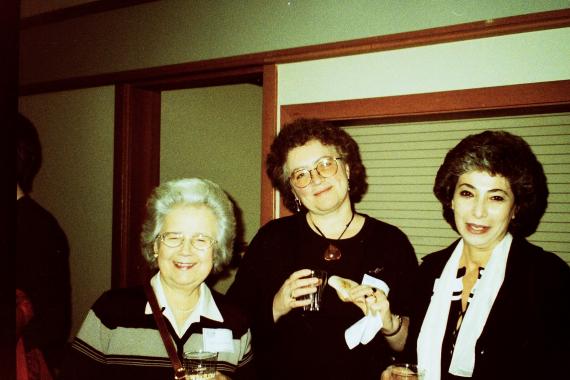
Professor Konick decided the department should organize a party for me because I was the first Russian there and he wanted to introduce me to everyone. So they decided to throw a party [and Professor Konick] said he would come and pick [my husband and I] up. At that time, we didn’t have a car of course.
I remember thinking about the prospect of having a party with professors. In Russia, that is a very big deal. And I am just a graduate student, you know?
So I wore my most beautiful long dress, and I demanded that my husband wear a three-piece suit and tie. When Professor Konick arrived, I saw in his eyes that he was surprised—but I didn't understand why.
Then when we arrived [to campus] he said, “Go downstairs.” For me, a “downstairs” was where you keep fruits, vegetables—not people! People do not gather downstairs. So then I tried to calm myself down and tell myself “it’s okay, it’s okay.”
Downstairs [at the party], I saw a group of people sitting on the floor with cans and cups. I thought, “Who are these people? Are they hooligans? Are they thieves?” Then I realized: this was the Slavic Department. At that time, they were all young and it was a completely different culture.
I have so many [memories] because I've taught for so many years—especially with students.
In the 1970s and 1980s, particularly when I started teaching advanced courses, we became a very close-knit group.
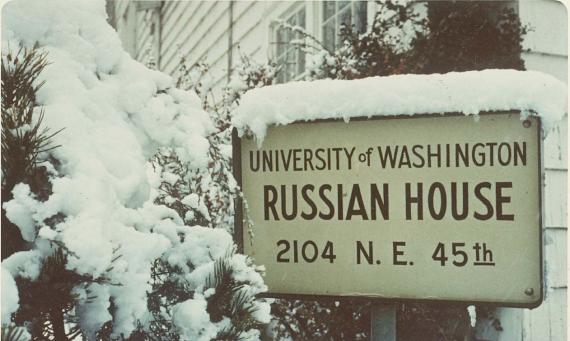
At that time, we had a Russian House for students studying Russian. Every Friday I would go there. We had a piano and a fireplace. We sat by the fireplace, sang Russian songs, recited Russian poetry, and held literary evenings. We became very close, especially with third-, fourth-, and fifth-year students. During those years I felt almost like a mother to them.
That is why I have so many great memories. Maybe someday I will write about them.
One student became a translator for Bush and Gorbachev. Later he started a translation business in New York. Another student worked at the Soviet Embassy for several years. Many students traveled to Russia, gained great experiences, and later used those experiences in federal agencies.
So there are many memories.
Tell us more about Russian House. It sounds very special to you.
It was off campus, around 42nd and 15th. Now it's used by another group, I think.
When the university decided to close the Russian House, it was very emotional. Former students stood behind us and supported us. On one hand it was sad. On the other hand, I saw how united everyone was. We were one huge group of people!
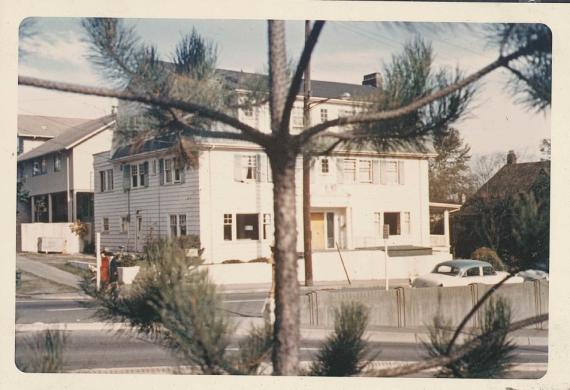
In the 1970s, 1980s, and even 1990s, students who studied Russian knew that they wouldn’t have any work because it was difficult to find a job with a Russian [degree]. They studied because they wanted to. They were interested. They were curious. That's why it was easy for me to organize literary evenings in the Russian House. We had a place where we could meet.
When the Russian House disappeared, even if I organized something on campus, it became just like another class meeting. It was completely different.
What have you enjoyed most about working with students over the years?
I truly love and appreciate American students. The main thing that I love is that they taught me and I taught them. It was a wonderful exchange!
Is there a particular course, project, or area of teaching that has been especially close to your heart?
You know, I can’t say one over the other. I love teaching Russian grammar. Poetry—I just love it! I love literature and language—everything! It all kept me going for fifty-three years. You have to love it.
If you could revisit one moment from your teaching career simply for the joy of experiencing it again, what would it be?
Probably my first class. I would probably behave differently because I was so scared of those students who were sitting in front of me!
At the time, you see, there were twenty and I was twenty-six, so they weren’t much different in age. They looked at me as though I were some strange bird from another world. [Laughs]. So I would behave differently.
At the end of the quarter, students filled out evaluations, and I was surprised when they wrote great evaluations! All the time I felt that I had done something wrong or I didn’t do what I wanted to do. I didn’t say what I wanted to say. I wondered: “they didn’t feel that I was scared? Or afraid of them?”
What advice would you offer people interested in learning Russian or another Slavic language?
Think twice. Because it’s not easy, and you have to be very dedicated to the language and willing to spend a lot of time studying. If you are not ready, don’t even start.
Russian isn't like moving from English to Spanish or Italian. It has a different alphabet. Learning the language also means learning the culture, history, traditions, and much more.
So I would suggest: think twice—maybe three times—before you start.
But once you begin, you'll discover it is a beautiful language, regardless of what governments do.
As you approach retirement, what are you most looking forward to in this next chapter?
What I plan to do when I retire is to work with Ukrainian children who came here not because they want to, but because of the war. Because I know Ukrainian, I would like to offer to teach them the Ukrainian language. There are not many opportunities for them here although there may be some classes at local churches. I would like to do something about that because I really want to help those people.
As long as my health permits, I will try.
What else are you looking forward to?
You know, one thing I am looking forward to is not correcting papers every day. [Laughs]
I also started studying Italian and want to continue. I love Italy and its culture, and I hope to travel there.
That is my goal.
...
Editor’s Note:
Throughout this conversation, Zoya Mihailovna Polack returns again and again to the people who have shaped her journey: colleagues, friends, and above all, students. It is fitting, then, that her legacy lives on in those same people. Her career has been one of connection between languages and cultures, between literature and life, and between generations of learners. As she begins a well-earned retirement, we celebrate not only her remarkable fifty-three years at UW, but also the enduring community she helped create. May the next chapter bring her the same joy and inspiration she has so generously shared with others.