The Oleg Fomin Scholarship supports students in exploring the languages, cultures, and histories of the post-Soviet world through travel. Scholarship recipient Lynn Mai spent Spring Break exploring Lithuania, Latvia, and Estonia. The travel reflection below chronicles her journey through the Baltic States and the lasting impressions it left on her.
Happy summer!
My name is Lynn Mai. I’m an incoming junior majoring in Linguistics & Public Health – Global Health. I’ve studied Russian at the University of Washington for two years. I applied for the Oleg Fomin scholarship last year because I love the sense of freedom travel grants me, and luckily, I got it!
With only Spring Break to cover everything on my itinerary and more, I traveled across the capitals of the Baltic States. How scary, but exhilarating, it was to be on the run against time!
Vilnius, Lithuania
My journey began in Vilnius, Lithuania. As I looked out the window of my lodging beside the Gate of Dawn, the snow still packed the cracks of the Soviet-style buildings in Old Town.
I wove through the cobbled streets, documenting variations in religious architecture in the city – something I'd continue to do throughout the trip. At the Užupis Border Control, guarding an art district once humorously self-declared a republic, I stamped my passport. I got my prisoner's headshot while touring the maximum-security prison turned artist sanctuary, Lukiškės Prison.
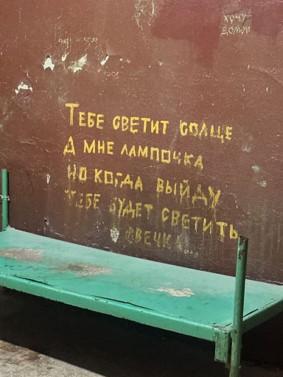
What I remember most from Lithuania was the Paneriai forest. Among the Baltics, it witnessed the most Jewish deaths during World War II, around 70,000 individuals.
I had misplanned that day; the train was empty, the visitors’ hut was closed, and I arrived alone in the forest after walking a mile in the oppressive fog before dawn.
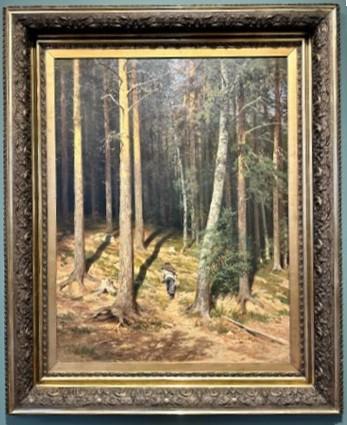
Dips in the earth smattered Paneriai. Isolated in the heart of the Lithuanian winter, it left a profound impression on me. The heat. The waking sun on my skin. The pyres, the nightmare of those who were burned alive in those hand-dug pits. The largest one was the size of Drumheller Fountain. I recall craning up at the spire-like pine trees, whose bare bark appeared skinned red by the sunlight. I thought to myself, “Do the songbirds know of the deaths here?”
Their language is universally incomprehensible to us. They are nature. But I was sure that even the birds would understand the language of violence. We hear the birds singing and they see the smoke. What I saw was not the work of nature. It was human.
Riga, Latvia
Riga was bustling. I'd overslept at one point and ate an impromptu burger at 1 AM, and it felt like I'd just stepped into rush hour. It was jarring to arrive in a lively and active scene after immersing myself in the post-Soviet atmosphere in Vilnius.
Here, I also heard the most Russian in passing conversations and saw traces of Russian occupation laced in all the places I visited. I felt pride in understanding the din of Russian conversation, but also discomfort, knowing the history of violence and oppression that helped make Russian the region's lingua franca to begin with.
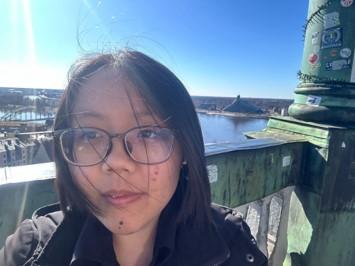
I lucked out: St. Peter's hosts evening hours on Saturdays, so I climbed the spire twice, once during the day and again at night. It was truly something else. From that height I could see how Old Town seamlessly blended into the modern architecture, and how the ancient streets I'd been photographing hours earlier looked neighborly in the warm orange lamplights.
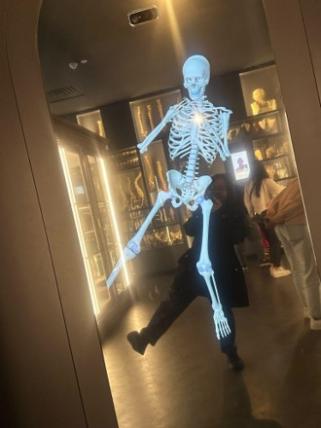
I lost track of time inside the Anatomy Museum. I could talk about it forever. I practically photographed every specimen they had.
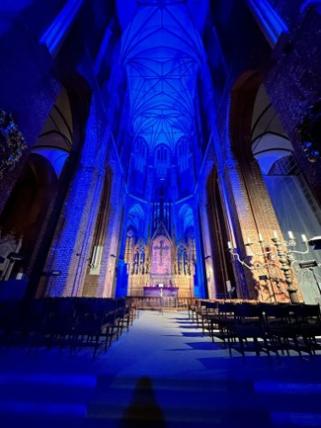
Halfway through my trip and on my ninth piece of rye bread with cheese and kvass, I found myself getting used to the city, even though I knew I'd have to say goodbye soon. The ledge on the eleventh step of the underpass outside my hotel, which I crossed daily to reach Old Town, was broken. I didn't trip on it when I left.
Tallinn, Estonia
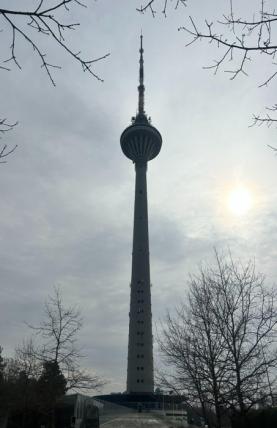
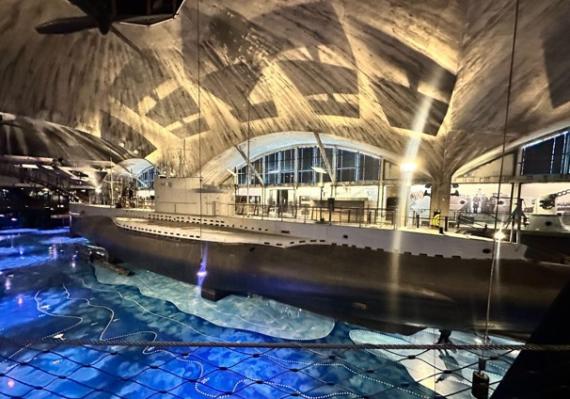
By now, I'd completed the list of locations I wrote about in my Oleg Fomin Scholarship application. My highlights were the Tallinn TV Tower and the Seaplane Harbour Maritime Museum!
Up on the twenty-first floor of the tower, you're greeted with a panoramic view of Tallinn against the Gulf of Finland. I ate dessert high up in the sky, pretending I didn’t almost just get blown away by the wind walking out on the observation deck. Otherwise, I had a lot of fun learning about the tower's engineering and how it stood as a symbol of Estonian independence during the Soviet era.
As for the maritime museum: BOATS!!!! THE OCEAN!!!!! Need I say more? I had a jolly time looking at boats that weren't the cruise ships always docked by the city. I crawled inside Lembit, a World War II submarine, and walked across a dry-docked icebreaker ship named Suur Tõll.
I'm eternally grateful to those who trusted this crazy plan of mine. As I traveled across the Baltics, I was reminded of Seattle’s dreary weather. No matter how much you love the freedom of travel, longing and homesickness follow; the best you can do is find home within yourself.
I left each place with gratitude for the insight it provided into the lives of people in the past and the peace it brings to those living there in the present.
Don’t be afraid! Не бойтесь! Try new things, be spontaneous, and do not let life snuff you out!
You are life!
- Lynn Mai